
- Home
- /
- Robotics Lab for Schools
- Brio Robotics
Inspiring Innovation with Smart Robotics Lab for Schools
Brio Robotics empowers schools with future-ready labs, expert training, and practical learning to strengthen robotics STEM education for students and teachers.
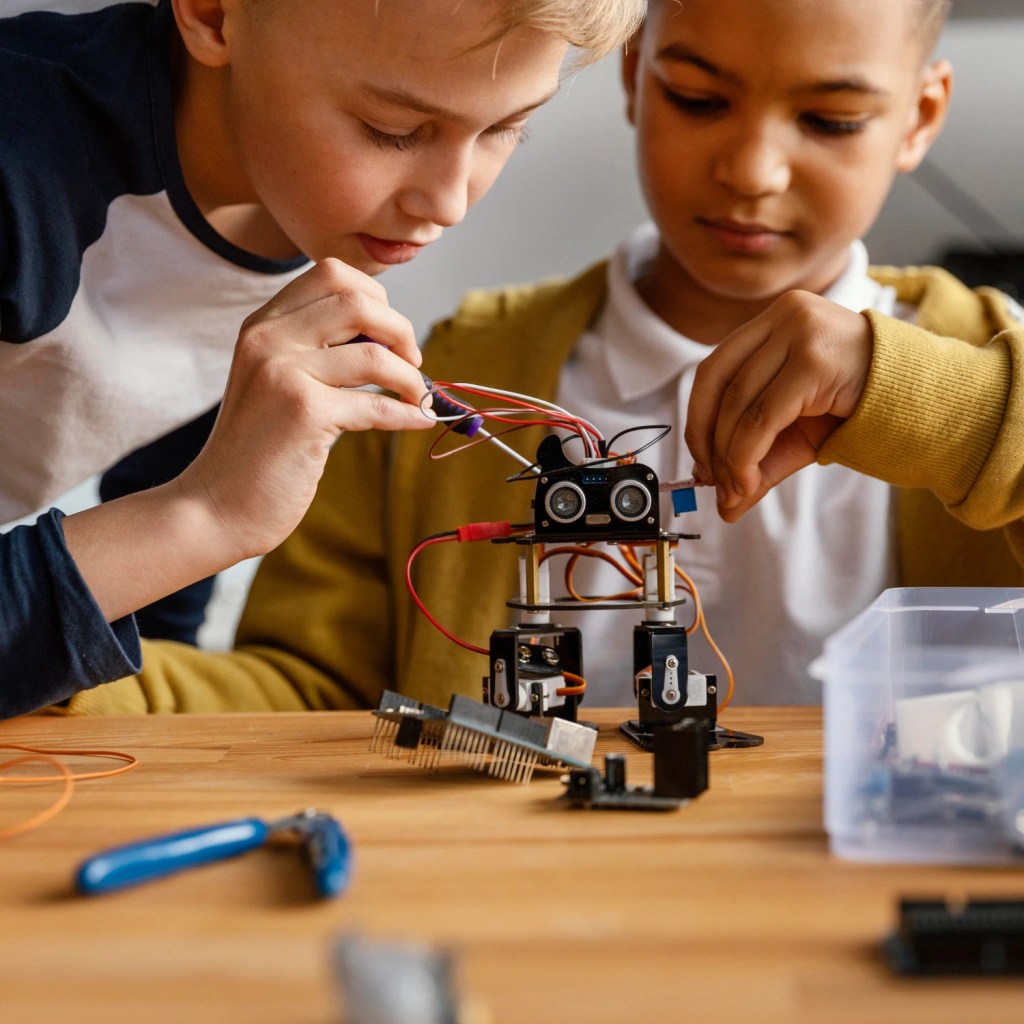


Why Our AI & Robotics Lab Stands Out?
Composite Skill Lab Structured Around Five Specialized Technology Zones
Robotics & IoT
Creating intelligent systems through coding innovation.
Artificial Intelligence
Machines learning to think, analyze, and decide.
Drone & Aeromodelling
Exploring aerodynamics with drones and models.
STEM Innovation
Solving real problems using STEM creativity.
Augmented and Virtual Reality
Immersive learning merging physical and digital worlds.
What We Provide
Brio's Advanced Robotics & AI Lab is where curiosity meets capability. Our future-ready STEM Lab for schools are built for students from Grades 3 to 9. It develops critical thinking, coding, and innovation through real-time projects and hands-on learning for a technology-driven future.
- Complete lab setup with advanced kits and world-class display.
- Class-wise curriculum aligned with NEP 2020 STEM standards.
- Dedicated trainers for the entire academic year.
- Infrastructure with workstations, cabinets, safety gear, and essential consumables.
- AI & Machine Learning Integration for Students
- 60+ Robotics Kits & interactive display units
- Real-world robotics projects
- LXR Platform Access + Trainer Deployment
- 10+ live display robots
- DIY kits for Robotics, AI, and Drone Lab.
- Drone Navigation & Humanoid Robotics
Centre Components
Brio Robotics Lab for schools supports STEM learning through hands-on robotics projects, fostering innovation, creativity, and exploration of emerging technologies.
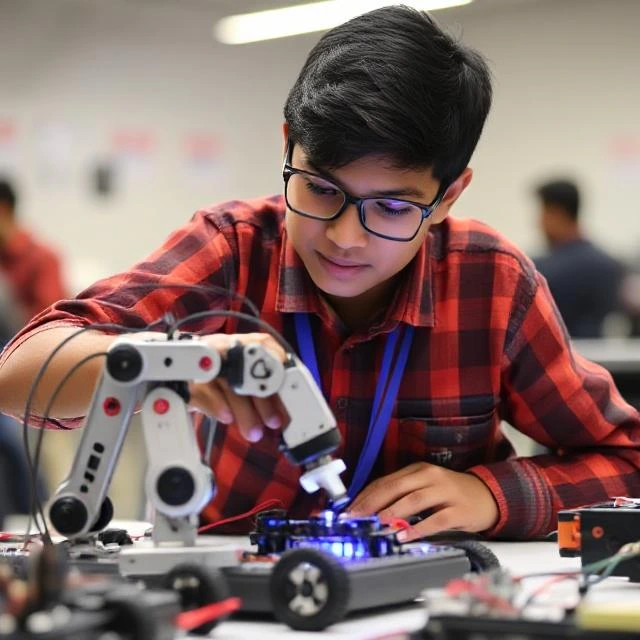
1. Robotics Innovation Lab
Objective
- Provide students with experience in robotics design, electronics, embedded programming, and automation.
- Enable cross-disciplinary integration between science, math, design, and computing.
- Introduce sensor-based control systems, actuators, and microcontrollers via guided DIY projects
- Encourage innovation and critical thinking through structured problem-solving challenges and working robotics prototypes.
- Promote student participation in national/international robotics competitions, hackathons, and exhibitions.
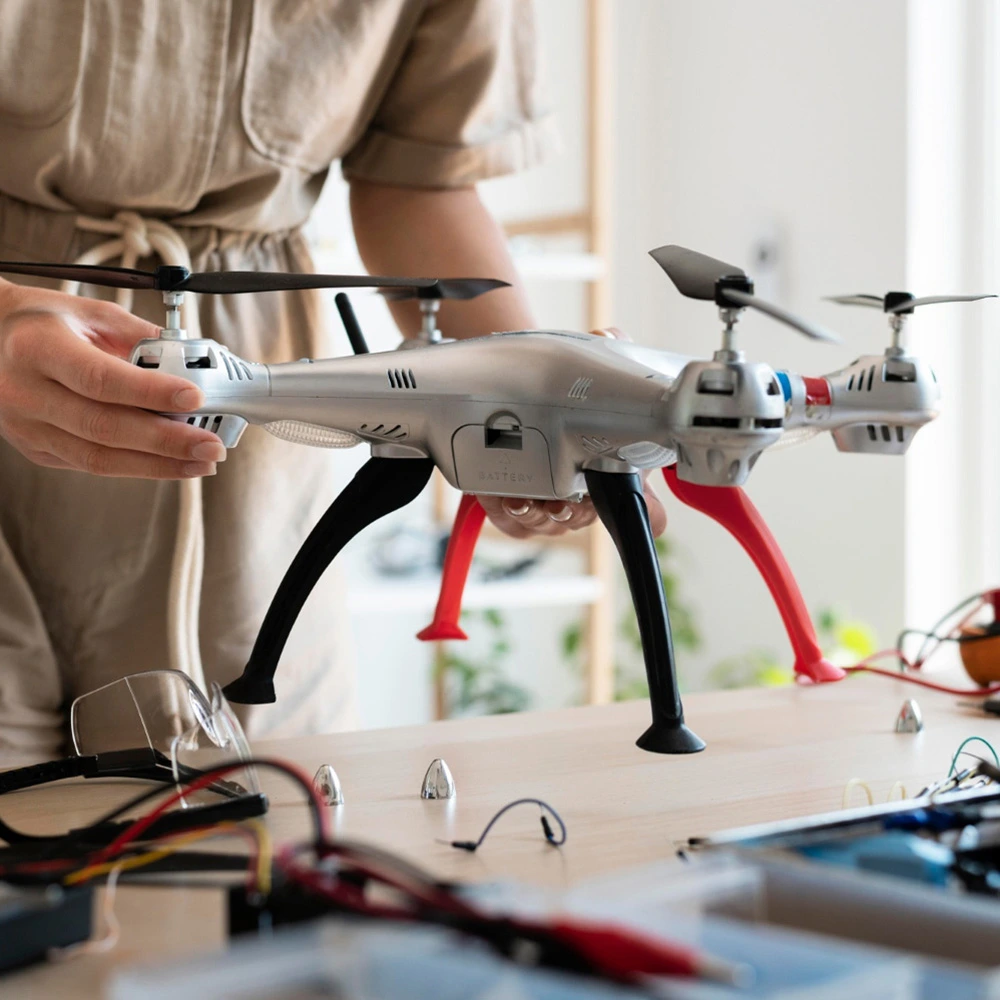
2. Drone Innovation Lab
Objective
- Practical exposure to drone design, assembly, programming, and flight operations.
- Integrate principles of physics, mathematics, geography, and computer science through aerial robotics applications.
- Introduce key concepts such as thrust, lift, stability, GPS navigation, and obstacle avoidance through guided projects.
- Encourage problem-solving and innovation through mission-based challenges and drone prototyping.
- Support student participation in STEM- based competitions.

3. Teacher Training and Capacity Building Program
Objective
- Conduct regular “Train the Trainer” programs (online + in-person) covering both technical and pedagogical aspects.
- Build a self-sustaining ecosystem of trained educators to lead lab activities and guide student projects.
- Integrate digital resources, curriculum guides, and assessments into school’s academic structure.
- Ensure alignment with emerging technologies and curriculum evolution under NEP 2020.
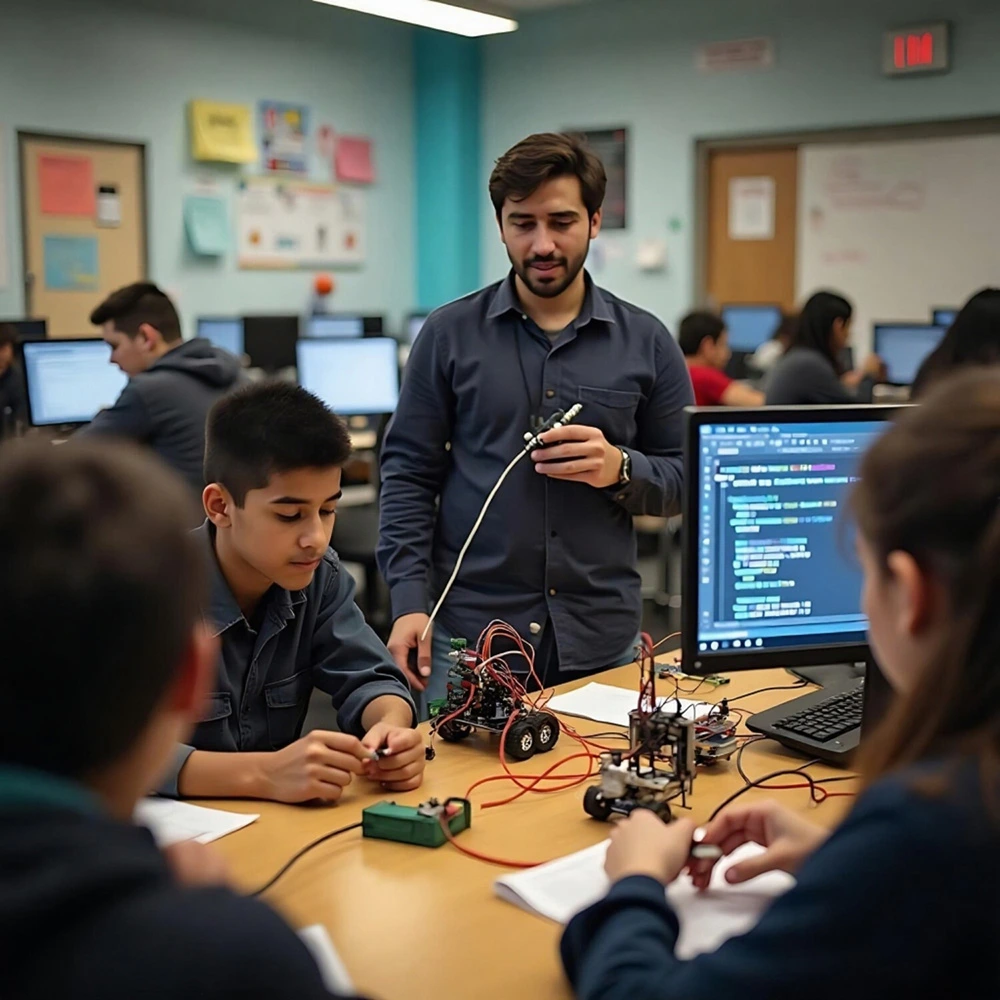
4. Innovation Through Project-Based Learning
- Waste management automation (e.g. Smart Dustbin)
- Agriculture support (e.g. Soil moisture bots)
- Energy conservation (e.g. Smart Lighting)
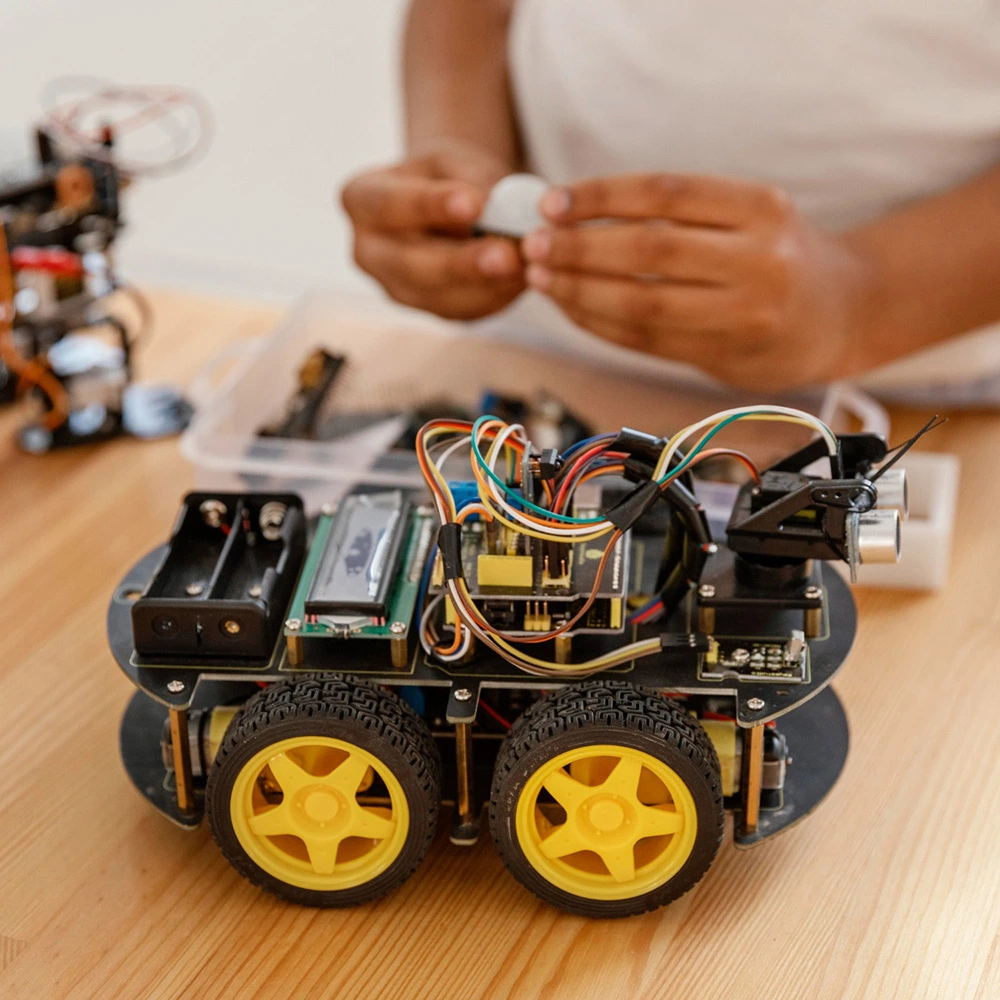
- Transportation and mobility (e.g. Obstacle Avoiding Car)
- Safety and surveillance (e.g. Line-following and voice-controlled robots)
5. Digital Learning with On-Site Trainers
Objective
- Deployment of expert trainers to guide and mentor students across all STEM labs
- Access to a LXR Platform for self-paced and classroom learning
- Digital logs for project tracking, performance analytics, and automated e-certificates
- Interactive tools for real-time feedback, assessments, and personalized learning support
- Online forums, student portfolios, and hybrid (virtual + physical) exhibition platforms
Detailed Breakdown of the Robotics Learning Curriculum
Grades 6-8: Explore & Build
Learn robotics fundamentals through hands-on projects, covering basic mechanics, electronics, sensors, and applications, with a focus on creativity, teamwork, and scientific concepts.
Grades 9-10: Code & Control
Advance to programmable robotics, learning coding, sensors, and digital systems to create autonomous robots focused on navigation, control systems, and applications.
Grades 11-12: Innovate & Engineer
Focus on innovation through AI, IoT, drones, and humanoid robotics, learning advanced programming, PCB design, and prototype development to build real-world projects.
Infrastructure & Facilities
Brio Robotics Lab for Schools features advanced infrastructure supporting experimentation, innovation, and modern technology learning. It provides modular, student-friendly environment nurturing curiosity, creativity, and technical skills.

1. Lab Setup & Zones
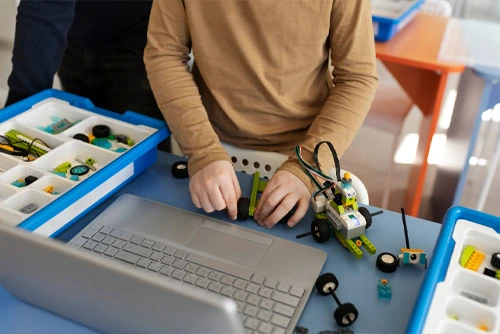
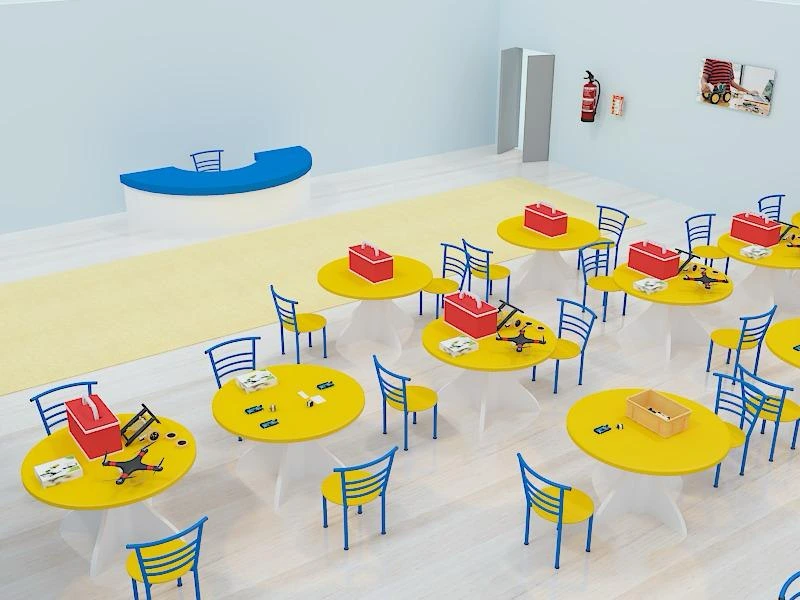
- Robots and Drones Assembly Zone: Spacious workbenches with safety-focused design, equipped with robotics kits, modular components, tools, and drone lab equipment.
- Programming & Control Zone: Computer stations preloaded with simulation software, coding environments (such as Arduino IDE, TinkerCAD, Scratch), and microcontroller interfaces.
- Innovation & Prototyping Zone: Includes 3D printers, PCB fabrication tools, soldering stations, and material supplies.
- Collaboration & Showcase Area: A multipurpose space for ideation sessions, team projects, presentations, and hosting innovation exhibitions and competitions.
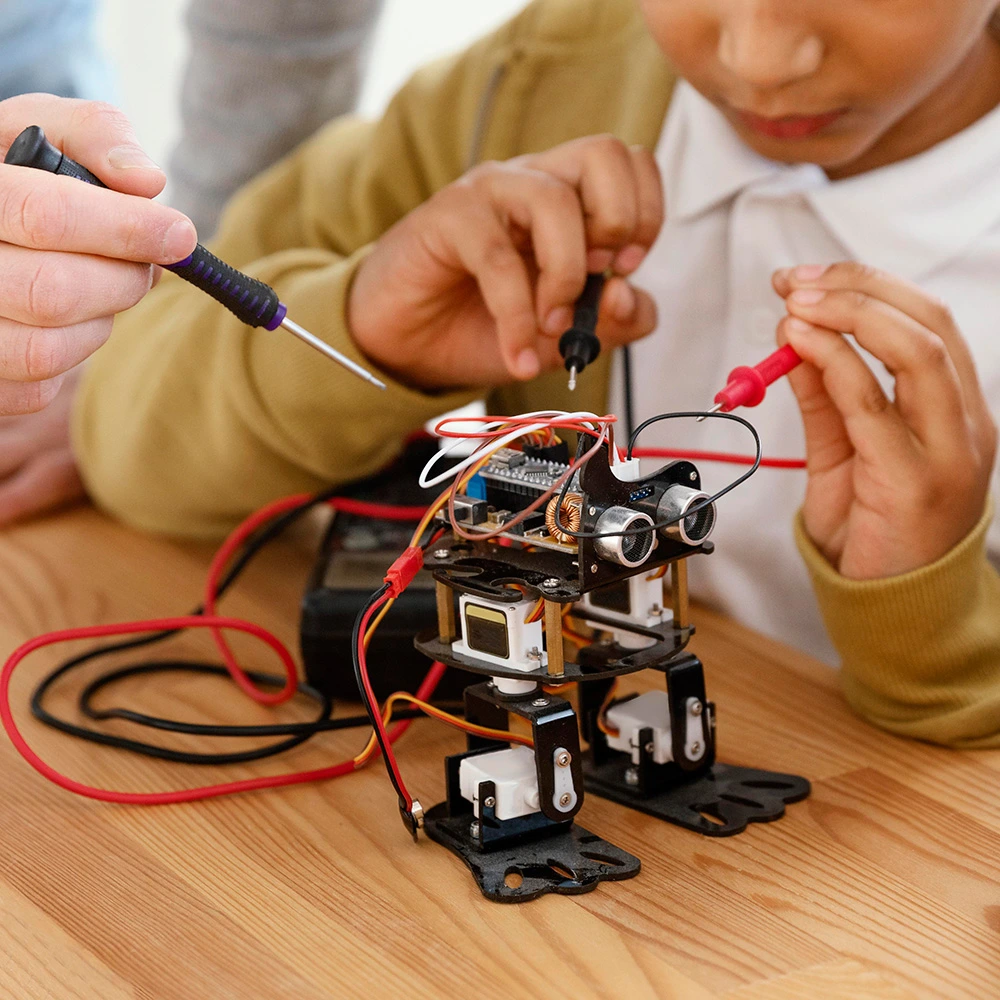
2. Technology & Equipment
- 12 robots and high-end drone for display
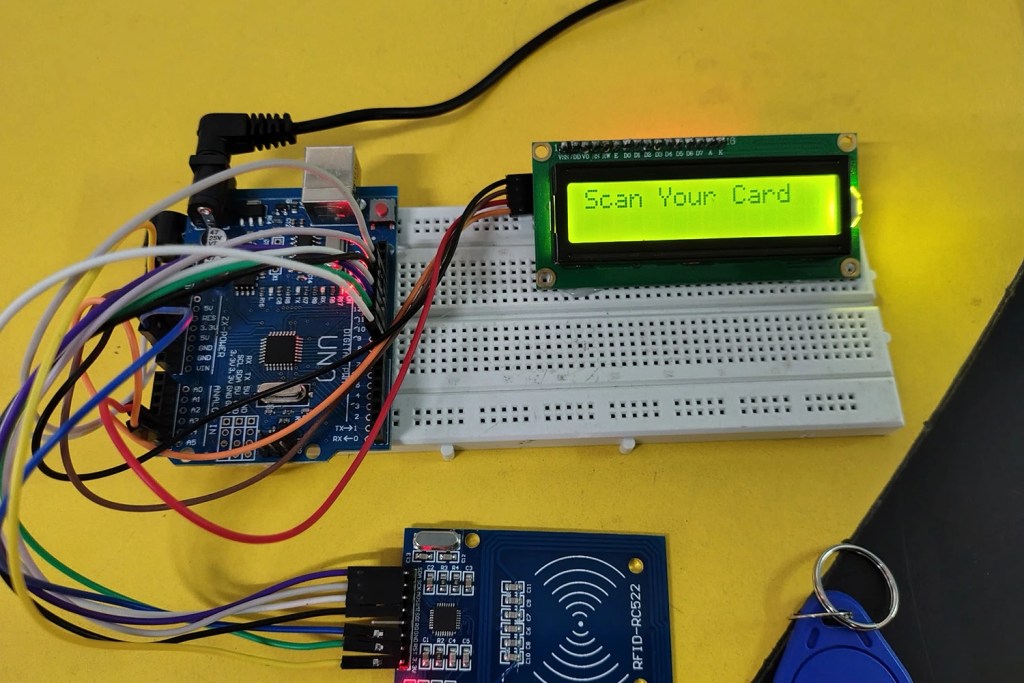
- Robotics kits (basic to advanced), including Arduino, NodeMCU, and Raspberry Pi-based systems
- High-performance desktop and laptop computers
- Electronic sensors, motors, actuators, and breadboards
- Wireless modules (Wi-Fi, Bluetooth) and IoT components
- Digital tools for circuit design, 3D modeling, and simulation
- Safety gear and robotics lab accessories

3. Connectivity & Digital Access
- Smart Class Integration: Each lab zone will include digital display systems and smart boards to enable interactive teaching.
- LXR Platform: All courseware, assignments, and project portfolios will be hosted on a centralized LXR, accessible to students and teachers alike.
- Surveillance & Security: CCTV surveillance, access control systems, and secure storage will be implemented to ensure safety and operational integrity.
4. Maintenance & Sustainability
- Equipment will be maintained through regular checks and documented upkeep schedules.
- Our STEM labs are designed for energy efficiency and material reusability. They emphasize sustainable practices like e-waste management and responsible disposal.
- Safety gear and lab accessories

Why Choose Brio Robotics for Schools?
- 15+ Years of Expert Implementation
- Future-Ready Skill Development
- National Recognition and Government Collaboration
- Turnkey Centre Setup Solutions
- Partnerships with Global Technology Leaders
Benefits of Brio Robotics Lab for Schools?
Brio Robotics empowers schools with future-ready labs, expert training, and hands-on learning, strengthening robotics STEM education aligned with NEP 2020 and global education standards.

Expert Guidance

Enhanced Creativity

Innovative Learning
Skill Development

Career Advancement

Technical Exposure
Why Robotics & AI Labs Are Important in Schools
Make Learning Future-Ready with Brio Robotics in Your School
Prepare students for future careers while making learning engaging and practical with Robotics Lab for Schools. Inspiring innovation from day one and empower students with hands-on robotics learning.
Frequently Asked Questions
Find clear answers to common questions about our robotics lab for schools, curriculum, training support, and implementation for schools.
1. How does Brio Robotics Lab for Schools align with NEP 2020?
Brio Robotics supports robotics lab for schools aligned with NEP 2020 through hands-on robotics, AI, and STEM learning. Students build future-ready skills using experiential, project-based activities designed for practical technology education.
2. What grades is this robotics program designed for?
Our robotics labs and curriculum are designed for students from Grades 3 to 9. It includes structured programs that grow progressively from foundational skills to advanced innovation projects.
3. Do you provide teacher training as part of the program?
Yes, we offer comprehensive training for teachers through online and in-person sessions. It covers technical skills, pedagogy, and lab management for delivering robotics STEM education confidently.
4. What kind of equipment will the school receive?
Schools receive robotics kits, drones, microcontrollers, sensors, programming tools, and access to software platforms. Our STEM lab is fully equipped for hands-on learning, prototyping, and advanced projects.
5. Can this program help students participate in competitions?
Yes, our curriculum prepares students for national and international robotics competitions, innovation expos, and STEM fairs. It helps them build confidence and practical skills for real-world challenges.
6. How long does it take to set up the Robotics lab for Schools?
Complete setup of Robotics STEM lab, including infrastructure, equipment, training, and trial runs, is completed within 4 to 6 weeks. It also depends on the school’s readiness and timelines.
7. Do students receive certifications?
Yes, students receive certificates for participation, project completion, and skill development. These certifications support future academic applications and demonstrate technological competencies.
8. How is the Robotics STEM Education Curriculum Structured?
The curriculum is divided into beginner, intermediate, and advanced stages, covering robotics, AI, IoT, and drones. Each stage combines theory with hands-on projects aligned to STEM principles.
9. What makes Brio Robotics different from other robotics programs?
Brio Robotics offers a complete, future-ready solution supporting robotics STEM education with a structured curriculum and expert training. Modern equipment and dedicated support help schools align with NEP 2020 and real-world technology trends.
10. How does this benefit schools in the long run?
Implementing Brio Robotics enhances a school’s reputation, attracts students, and supports higher academic standards. It prepares both teachers and students for the future of education and technology.