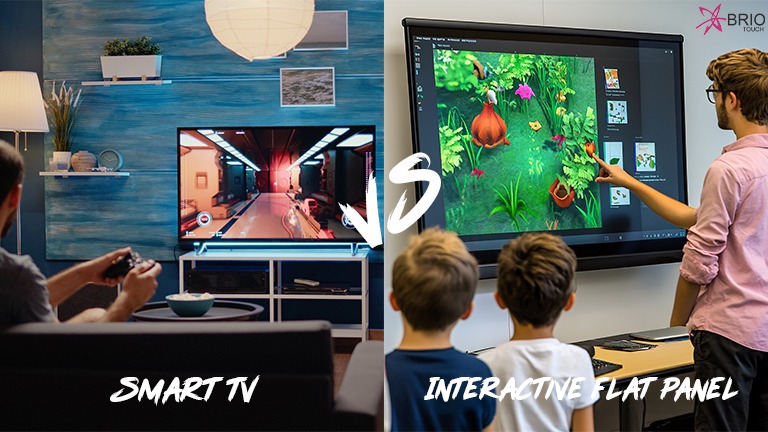
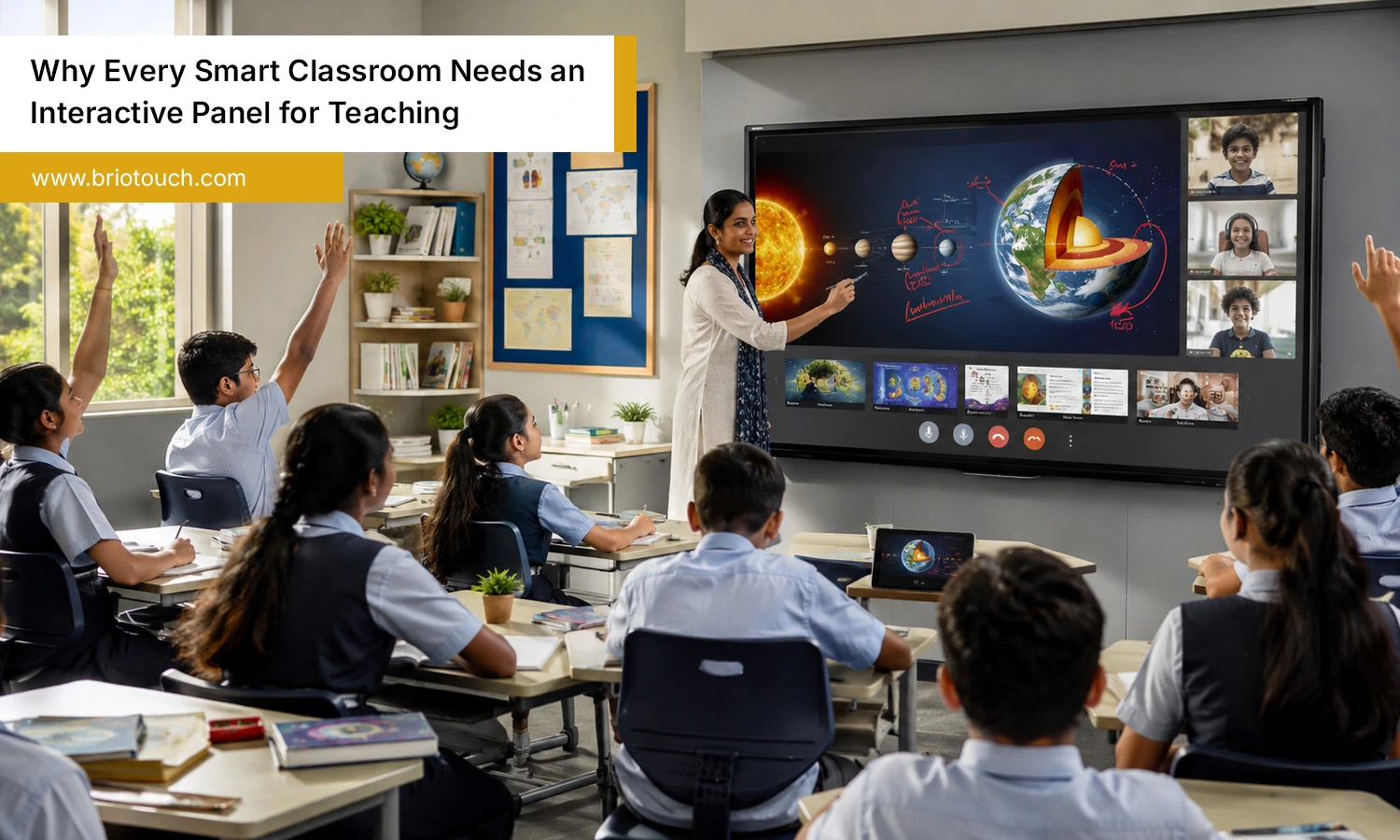
Walk into a modern classroom today, and you’ll notice that learning is no longer limited to textbooks and whiteboards. Students expect lessons that are engaging, visual, and interactive. At the same time, teachers are looking for smarter ways to explain concepts, encourage participation, and make lessons more effective. This is where an interactive panel for teaching is transforming the classroom experience. It combines technology with education to create a more collaborative learning environment. In this blog, we’ll explore why traditional teaching methods face new challenges, the key benefits of interactive panels, their essential features, and how they help improve learning outcomes.
Table of Contents
Also Read: Top Benefits of Using an Interactive Flat Panel Digital Board for Learning
Why Traditional Teaching Methods Are No Longer Enough
Teaching has evolved significantly over the years, but many classrooms still rely heavily on methods that were designed decades ago. While traditional teaching approaches have helped generations of students learn, today’s learners interact with information differently. They are exposed to digital content every day and often respond better to visual and interactive experiences. Long lectures and static presentations can make it difficult to maintain attention and participation throughout a lesson. As education becomes more technology-driven, schools need teaching tools that support engagement, collaboration, and active learning rather than one-way communication.
Challenges of Traditional Teaching Methods
- Limited student participation during lessons.
- Difficulty explaining complex concepts visually.
- Lower engagement compared to digital learning experiences.
- Challenges in supporting different learning styles.
- Reduced opportunities for classroom collaboration.
- Limited access to multimedia educational resources.
Key Benefits of Using an Interactive Panel for Teaching
Improves Student Engagement
Keeping students focused throughout a lesson is one of the biggest challenges teachers face. An interactive panel for teaching helps solve this by turning passive learning into active participation. Instead of simply listening to explanations, students can interact directly with lesson content, answer questions on the screen, and take part in group activities. The touch-enabled interface creates a more dynamic classroom environment where students feel involved in the learning process. When learners participate actively, they tend to stay focused longer and show greater interest in the subject being taught. This increased engagement can make lessons more enjoyable and productive.
Supports Visual and Multimedia Learning
Every student learns differently. Some understand concepts through reading, while others learn more effectively through visuals and demonstrations. Interactive panels allow teachers to combine text, images, videos, animations, and presentations within a single lesson. This variety helps explain concepts in a way that is easier for students to understand. Complex topics become more accessible when supported by visual examples and real-world demonstrations. Teachers can quickly switch between different types of content without interrupting the lesson flow. As a result, students can absorb information more effectively and retain important concepts for a longer period.
Encourages Classroom Collaboration
Modern education places a strong emphasis on teamwork and collaborative learning. Interactive panels create opportunities for students to work together while solving problems, discussing ideas, and completing classroom activities. Multiple students can interact with the screen simultaneously, making group exercises more engaging and inclusive. Collaborative activities encourage communication, critical thinking, and peer learning. Students often gain new perspectives when working alongside classmates and sharing ideas. By creating an environment that supports teamwork, an interactive panel for teaching helps prepare students for future academic and professional settings where collaboration plays an important role.
Simplifies Lesson Delivery
Teachers often manage numerous resources during a lesson, including presentations, notes, videos, websites, and educational applications. Switching between these resources can consume valuable teaching time. Interactive panels simplify lesson delivery by bringing everything together on one platform. Teachers can access materials quickly, annotate content in real time, save notes instantly, and move between resources without disruption. This streamlined approach allows educators to focus more on teaching and less on managing technology. The result is a smoother classroom experience that improves efficiency while helping teachers deliver lessons with greater confidence and clarity.
Supports Hybrid and Remote Learning
Learning environments have become more flexible than ever before. Many schools and institutions now support a combination of in-person and remote learning. An interactive panel for teaching helps bridge the gap between physical and virtual classrooms by supporting video conferencing, screen sharing, and digital collaboration. Teachers can present lessons to students regardless of their location while maintaining interaction and participation. This flexibility ensures continuity in education when circumstances require remote access. It also allows schools to adapt to changing educational needs without compromising the quality of instruction or student engagement.
How Interactive Panels Improve Learning Outcomes
Better Knowledge Retention
Students often remember information more effectively when they can see, hear, and interact with it. Interactive lessons make learning more engaging, helping concepts stay fresh in their minds for longer periods.
Increased Classroom Participation
Students tend to participate more actively in lessons when they can engage directly with the learning material. This hands-on approach encourages discussions, questions, and participation from learners who may otherwise remain quiet.
Faster Understanding of Complex Concepts
Difficult topics become easier to grasp when supported by videos, animations, diagrams, and real-time explanations. Interactive panels help teachers break down complex ideas into simpler, more understandable learning experiences.
Supports Different Learning Styles
Every student learns differently. Interactive panels support visual, auditory, and hands-on learners by combining multiple teaching methods within a single lesson, making learning more inclusive and effective.
Improved Teacher-Student Communication
Teachers can explain concepts more clearly using interactive tools, visuals, and annotations. This creates opportunities for better discussions, immediate feedback, and stronger communication between teachers and students.
Greater Student Confidence
Regular participation in interactive activities helps students become more comfortable expressing ideas and answering questions. Over time, this increased involvement can build confidence and encourage independent learning.
Conclusion
Technology is reshaping the way students learn and teachers teach. As classrooms become more focused on engagement, collaboration, and digital learning, schools need tools that support these evolving needs. An interactive panel for teaching helps create a more dynamic learning environment by making lessons visual, interactive, and easier to understand. From improving student participation to supporting multimedia content and collaborative activities, its benefits extend across the entire classroom experience. Institutions that invest in modern teaching solutions today are better prepared to deliver effective learning experiences and meet the expectations of future generations.
Ready to transform your classrooms with smarter learning technology? Explore Briotouch’s advanced interactive panel for teaching solutions and create engaging, future-ready learning environments that inspire both teachers and students.
Frequently Asked Questions
Q1: What is an interactive panel for teaching?
Ans: An interactive panel for teaching is a touchscreen digital display that allows teachers and students to interact with educational content, presentations, videos, and learning resources directly on the screen.
Q2: How does an interactive panel improve student engagement?
Ans: Interactive panels encourage active participation through touch-based activities, multimedia lessons, real-time collaboration, and interactive discussions, helping students stay focused and involved.
Q3: Are interactive panels suitable for all educational institutions?
Ans: Absolutely, interactive panels can be used in schools, colleges, universities, coaching centers, training institutes, and corporate learning environments to enhance teaching and learning experiences.